Updated on Thursday, 18 September 2025 - 5:44pm
हिंदी में पढ़ें
Types of Damaged Notes
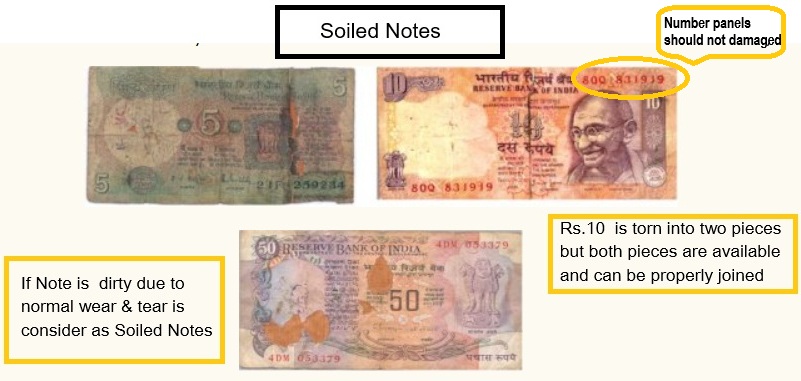 To expand image
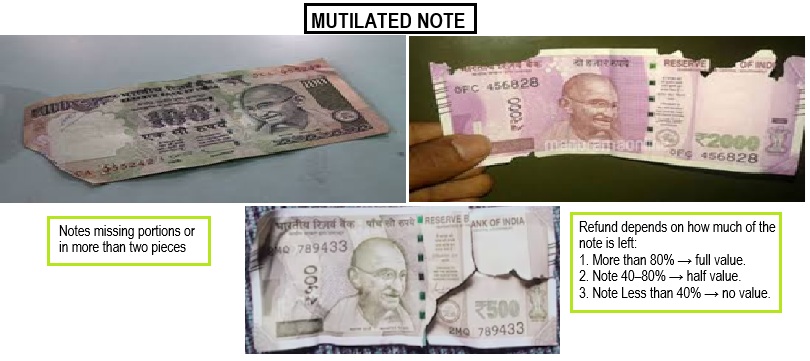 To expand image
Procedure To Exchange Notes
1. At Any Bank Branch
- Soiled notes: Up to 20 pieces or value up to ₹5,000 → exchanged immediately, free of charge.
- Larger numbers/value → bank accepts, gives receipt, credits value later (may charge service fee).
- No form required. Even non-customers can use this.
2. At Currency Chest Branches
- For mutilated or imperfect notes (missing parts, multiple pieces).
- If 5 pieces or less then 5, branch may pay immediately. If unable, they send to linked currency chest.
- If there are 5 pieces or more, if the value exceeds ₹5,000, approach the currency chest directly or send them by insured post.
- Refund credited within 30 days.
3. At RBI Issue Offices
- For severely damaged notes (burnt, brittle, charred, inseparably stuck).
- Banks are not obliged to accept these, so go directly to RBI Issue Office .
- RBI adjudicates under Note Refund Rules and pays applicable value.
4. By TLR Cover / Registered Post
- TLR = Triple Lock Receptacle, available at RBI offices .
- Used for mutilated notes. You fill details (name, address, denomination, bank a/c) and deposit or post.
- RBI examines and refunds later via bank credit / draft.
Key Points to Remember
- Essential features (watermark, signature, RBI name, etc.) must be visible.
- Refund depends on note size left:
- Note is 80% → full value (₹50 & above).
- Note 40-80% → half value.
- Note is less then 40% → no value.
- For notes up to ₹20, more then 50% area must be intact for full value.
- Banks must exchange for all, not only their own customers.
- If refused, you can complain under RBI Complaint Management System (CMS) Portal .


Comments
Rat eats my notes.
Rat eats my four 100 rupees notes. Can I exchange them from banks?